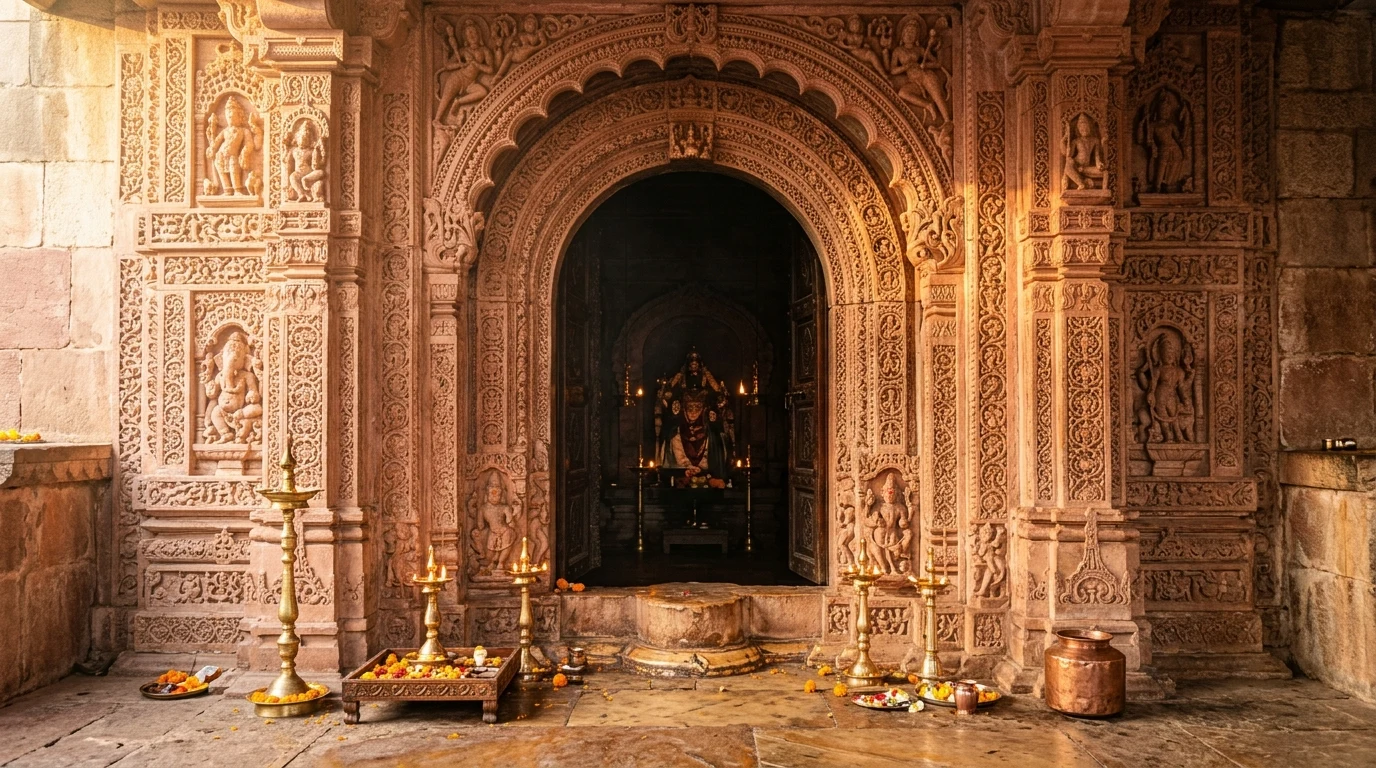
Why would a transgender welfare board in Bihar ask for a temple for the Prime Minister? The short answer comes from the person who proposed it. Board member Rajan Singh says Narendra Modi "gave us respect and rights" and that the community has no temple of its own. Critics reply that a separate shrine does not bring inclusion and that older rights problems remain open. This article sets the two sides next to each other, with each claim tied to the outlet that reported it. It looks at why the transgender community Modi temple idea was raised and how it has been received.
Key takeaways
- On 29 July 2026 the Bihar State Transgender Welfare Board approved a proposal, made by member Rajan Singh, to build a temple for Prime Minister Narendra Modi in Patna.
- Singh gives two reasons: gratitude for "respect and rights", and the lack of a temple of the community's own.
- The Quint's opinion writer says a separate shrine "does not bring inclusion". The Wire asks why the board is not focused on protecting trans rights.
- Another board member, Anupriya Singh, told Queerbeat the temple is Rajan Singh's personal agenda, not the board's.
- No land, money or design has been confirmed. Figures such as Rs 112 crore are Singh's own request.
What exactly was proposed?
The Bihar State Transgender Welfare Board is a government body under the state Social Welfare Department. PTI reported, in a story carried by ThePrint on 29 July 2026, that the state set it up in August 2025 and that this was its first meeting. The report says the board approved the proposal on Wednesday, 29 July 2026.
The Free Press Journal reported the same day that construction would begin only after the state government identifies land, and that no site had been named. It also reported Singh saying the government would bear the construction cost, without giving an amount. Later, on 20 August, Singh told PTI the plan was about Rs 112 crore on five acres. Those numbers come from Singh. They are not a sanctioned budget. Our Rs 112 crore fact-check explains where each figure came from.
A note on names: PTI spells the surname of the proposer as "Ranjan". Other outlets write "Rajan". Reports also differ on which pronouns to use for Singh, so this article uses the name. For background on the person, see the profile of Rajan Singh.
What reasons did Rajan Singh give?
According to PTI, Singh gave two reasons for the proposal.
- Respect and rights. Singh said Narendra Modi "gave us respect and rights", and that the temple would honour him for that.
- No temple of their own. Singh said the transgender community "does not have a temple of its own". The temple would give the community a place of worship that belongs to it.
PTI also reported Singh saying the proposal "received the support of all members". That is Singh's description. As we explain below, another board member disputes it.
Queerbeat reports that on 30 July Singh praised Modi for the Transgender Persons (Protection of Rights) Act, 2019. Singh also told Queerbeat that she is not affiliated with the BJP.
Which law does Singh point to?
The Transgender Persons (Protection of Rights) Act, 2019 is the central law that bans discrimination against transgender people in areas such as education, jobs and health care, and sets up a process to get an official certificate of identity. The Supreme Court case Swati Bidhan Baruah v. Union of India, as summarised by the Supreme Court Observer, says the Act received assent on 5 December 2019. It came into force on 10 January 2020. Our own page, the 2019 Act explained, goes through it section by section.
PTI also quotes Singh as saying the 2019 Act gave the community "institutional representation in the state secretariat". So the argument from the proposer's side is simple: the law and the board exist, and the temple is a way to say thank you.
The Act is also contested. The Supreme Court Observer says petitioners in Swati Bidhan Baruah v. Union of India, filed in 2019 and 2020, ask the court to strike down several sections. They argue the Act may break rights under Articles 14, 15, 16, 19 and 21 of the Constitution. They also ask whether trans people should get reservations (quotas) in jobs and education, as the 2014 NALSA judgment directed. The Observer's page says the case is pending and was last updated in February 2022, so check the court's records for the latest. This is general information, not legal advice.
| Question | What supporters of the temple say | What critics say |
|---|---|---|
| Why a temple? | It thanks the Prime Minister for "respect and rights". | An elected leader doing constitutional duties should not be treated as divine (The Quint). |
| Why for this community? | The community has no temple of its own. | A separate shrine can isolate people instead of including them (The Quint). |
| Is the board behind it? | Singh says all members supported it. | Anupriya Singh says it is a personal agenda (Queerbeat). |
| Is it the right priority? | Singh links it to the rights and respect he credits to Modi. | Protecting trans rights should be the focus (The Wire's headline question). |
What do supporters of the idea say?
We found few named supporters besides Singh. The case for the temple, as reported, rests on Singh's own words. The Quint's opinion piece says backers presented the temple as thanks for legal recognition. We did not find a statement from the BJP, the Prime Minister's Office, Narendra Modi or the Bihar government about the temple. If one appears, we will add it. See our page on official and political responses for what we have checked.
Wanting a place of worship that belongs to your community is an understandable wish. The debate here is whether a temple dedicated to a living political leader serves that wish.
What does The Quint's critic say?
The Quint published an opinion piece by Sanskriti Pandey on 7 August 2026. We could read only part of the piece. From that part, the writer makes these points:
- "Building a separate, segregated shrine does not bring inclusion."
- She writes about the "performative politics" behind the move.
- She questions why an elected head of government doing basic constitutional duties should be honoured with an altar, as if it were divinity.
This is an opinion column, not a news report. It states the writer's view. Notice that her main worry is about separation: a shrine only for one community, she argues, can turn into a place set apart from everyone else.
What does The Wire's piece ask?
The Wire ran a piece headlined "Bihar's Trans Welfare Board Wants to Build a Temple for Modi. What About Protecting Trans Rights?" We could not open the full article, so we rely on the headline, which asks whether protecting trans rights should come before a temple. We could not read the body of the piece, so we do not describe its arguments. Read the original on The Wire for its full case.
Does everyone on the board agree?
Not according to Queerbeat. Its report of 21 August 2026 says another board member, Anupriya Singh, disputed the claim of unanimous support. She told Queerbeat that the temple was Rajan Singh's personal agenda and was not backed by the board as a whole. Queerbeat also said it reviewed the minutes of the 29 July meeting and that they do not mention the temple.
These are two different accounts of one meeting. Singh says all members backed the idea. Anupriya Singh says they did not. We have not seen the full minutes ourselves, and no official statement from the board or the Social Welfare Department settles the point. Until it does, treat "unanimous" as a claim by one member.
Queerbeat also reported that on 14 August, Patna High Court lawyer Prashant Kumar filed a complaint with the Prime Minister's Office. He asked for an inquiry into whether Singh used the Prime Minister's name, designation or photograph in a private activity to seek financial contributions. A complaint is not a finding. We have seen no report of any result.
What happened at the Press Club of India?
On 20 August 2026 a reading of a "Modi Chalisa" was held at the Press Club of India in Delhi. Queerbeat says Singh invited the speakers. The Press Club said it did not organise the event, that the hall had been booked for a press conference and that the booking terms were broken. It said it stopped the event. The board has not been shown to have organised it. Our page on the Press Club of India event has the full account.
Queerbeat also quotes a trans rights activist, Ritu, who said honouring those who oppress trans people mocks the daily struggles of trans people. An unnamed senior activist told Queerbeat the event defames the trans community. These are individual views. No single person or board speaks for the whole community.
Which rights issues do critics say are still open?
Critics often argue that a temple is a symbol, while daily problems are practical. The documented, open legal questions include:
- Reservations. The 2014 NALSA judgment directed that trans people be treated as a socially and educationally backward class for quotas. The Supreme Court Observer says the petitioners in the pending case still ask the court to order this. The case page also lists challenges to the way the Act ties recognition of gender identity to medical steps, and to the lower penalty for sexual abuse of a trans person than the law sets for abuse of a woman.
- Certificates. The Act sets up a certificate process through a district authority. Petitioners say parts of it conflict with the right to choose one's own gender identity.
- Welfare boards. Whether state boards have real power and money to help is a separate question. Our guide to state transgender welfare boards explains how such bodies work.
| Open question | What the case page says |
|---|---|
| Quotas in jobs and education | Petitioners ask the court to direct reservations, as NALSA did in 2014. |
| Medical steps for recognition | Section 7 is challenged for tying recognition to surgery. |
| Penalty for sexual abuse | Section 18(d) is challenged for a lower maximum than the law sets for abuse of a woman. |
| Status of the case | Pending; the page was last updated on 7 February 2022. |
For the longer story of how these rights were won, see the long road to equality. For more reading on the community, politics and elections, visit our Community and Rights topic page.
Is this the first Modi temple idea?
No. Shrines for the Prime Minister have been reported before, built by private followers. In 2015 followers in Kothariya village near Rajkot built one. Reports differ on its cost, and Modi was reported to be "appalled" by the idea. Our Rajkot page has the details. In 2021 a temple in Aundh, Pune, was reported to have had its idol removed after BJP leaders objected. The Patna proposal differs in one way: it was put forward through a government board, not by private followers.
What we do not know yet
- Whether the full board, or only some members, backed the proposal. Singh and Anupriya Singh disagree.
- Whether any land has been found. Reports say none had been named.
- Who would pay. Singh says the state would, but no sanction has been reported.
- Whether the Bihar government, the Prime Minister's Office or Narendra Modi support the idea. We found no statement.
- Whether any trust, designer or timeline exists. We found none.
- What the complaint to the Prime Minister's Office led to.
Tracking each step is easier with our timeline of the proposal and our report on the board's approval.
Common questions
Who proposed the Modi temple in Bihar?
Board member Rajan Singh proposed it at the first meeting of the Bihar State Transgender Welfare Board on 29 July 2026, according to PTI. PTI spells the name Ranjan.
Has the government agreed to pay for it?
Singh said the state government would bear the cost, according to the Free Press Journal. We have found no report that money has been approved.
Did every board member support it?
Singh says yes. Board member Anupriya Singh told Queerbeat it was Singh's personal agenda, and Queerbeat said the meeting minutes it saw do not mention the temple.
What is the main criticism?
The Quint's opinion writer says a separate shrine does not bring inclusion. The Wire asks why trans rights are not the priority.
Is the temple being built?
No. We have found no report of land, money, a design or construction. It remains a proposal.
Sources
- ThePrint (PTI): Bihar transgender board approves proposal to construct temple in Modi's name, 29 July 2026
- Free Press Journal: Bihar's transgender welfare board approves construction of temple dedicated to Modi, 29 July 2026
- The Quint (opinion, Sanskriti Pandey): transgender board temple for Modi, 7 August 2026
- The Wire: Bihar's trans welfare board wants to build a temple for Modi. What about protecting trans rights? (headline only confirmed)
- Queerbeat: A Bihar transgender welfare board member hosts a Modi Chalisa at the Press Club of India, 21 August 2026
- Supreme Court Observer: Swati Bidhan Baruah v. Union of India, case background
Last checked on 24 October 2026. Spotted a mistake? Tell us through our contact page.