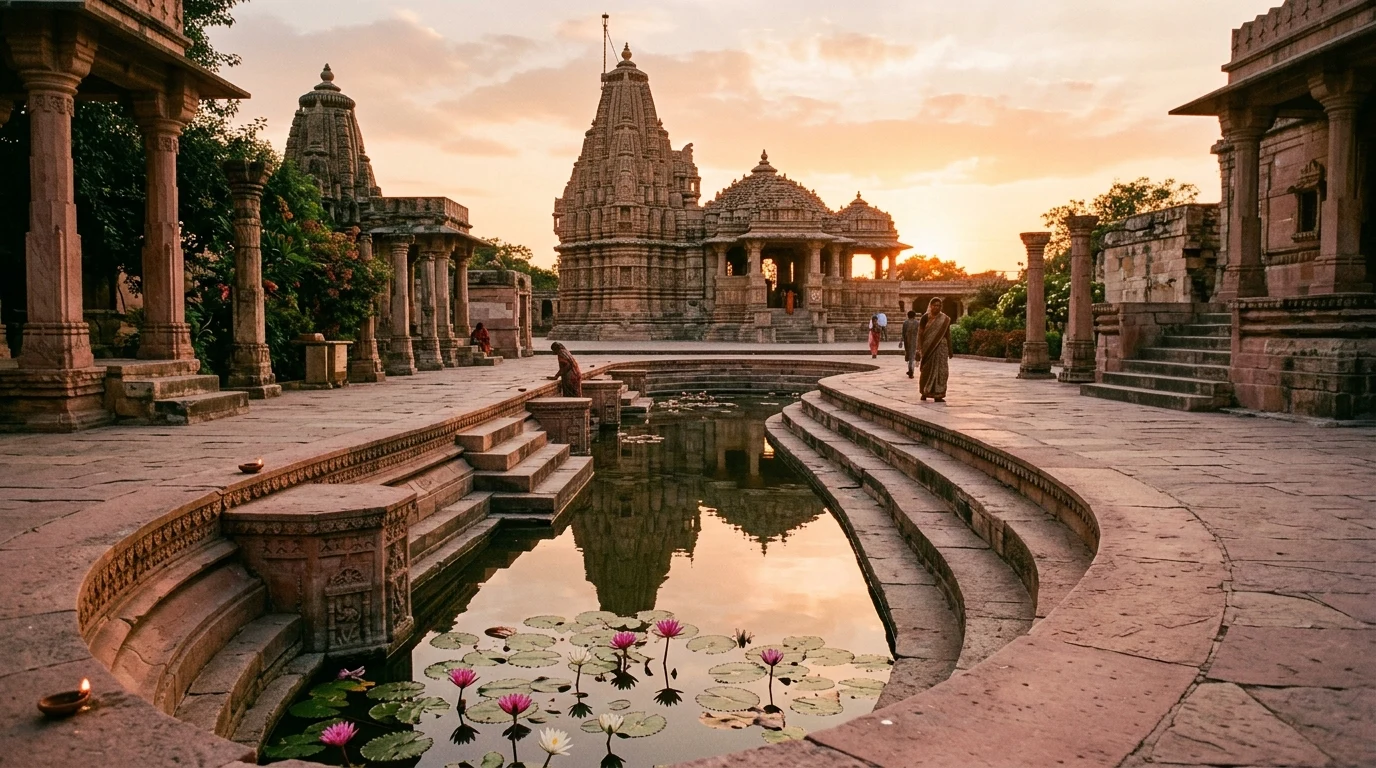
The Patan Devi temple in Patna is a Hindu temple to the goddess, and a place of worship for many families in the old city. In fact there are two: Badi (big) Patan Devi, placed in Sadikpur by Bihar Tourism and in Maharajganj by Wikipedia, and Chhoti (small) Patan Devi in the Chowk area of Patna City. Many people also call the goddess Patneshwari. This guide explains what each temple is, what the Shakti Peeth tradition says, and what to confirm before you travel.
Key takeaways
- There are two temples, Badi Patan Devi and Chhoti Patan Devi, in different parts of old Patna.
- Tradition says a body part of the goddess Sati fell in this region. This is a belief of devotees, not a matter of historical record.
- Sources disagree on whether Patna is named after the temple. A second explanation says "patan" simply means a town.
- Even the count of Shakti Peeths differs: 51 on some pages, 52 on others.
- Opening hours are listed differently by different sources, so check locally before you go.
Why does the Patan Devi temple matter in Patna?
Patna has been a city for over two thousand years, and Patan Devi is one of its best-known Hindu temples. Its tradition is said to reach far back, but we found no dated record for the present buildings. Treat the temple's age as local belief, not proven history.
For local families the temple is also simply a place of daily worship. The Wikipedia entry says that during Saptami, Ashtami and Navami, the Durga Puja days, about a thousand people visit either temple each day, and a fair is held.
If you came to this site looking for the proposed Modi Mandir, note that no such temple stands today. Our page Modi Mandir kahan hai explains the status. Patan Devi is a real, working temple you can visit.
What is the Shakti Peeth tradition?
A Shakti Peeth is a place where, according to Puranic stories, a part of the body of the goddess Sati fell to earth. In the story, Sati's body was carried by her grieving husband Shiva, and Vishnu cut it into pieces with his Sudarshan Chakra (his spinning disc). Each place where a piece fell became a sacred seat of the goddess.
For Patan Devi, the tradition most often repeated says Sati's right thigh fell here. The Bihar Tourism page words it a little differently. It says her right thigh and cloth (pata) fell in Magadh, which it identifies with the Maharajganj and Chowk areas of Patna. That is why, in this telling, two temples exist.
Two cautions help here. First, this is faith, and the site presents it as faith. We cannot confirm it with evidence, and a believer does not need us to. Second, the lists of Shakti Peeths are not fixed. Wikipedia says 51; the Bihar Tourism page says 52. Texts and traditions give different lists, so do not be surprised when two guides disagree.
Words worth knowing
- Shakti Peeth: a sacred seat of the goddess, linked to the story of Sati.
- Siddha: in this context, a place regarded as spiritually powerful.
- Patneshwari: a name of the goddess of Patan Devi, used locally.
- Badi / Chhoti: big / small.
- Havan kund: the fire pit used for offerings. The Bihar Tourism page notes a large one in front of the Badi sanctum.
- Mela: a fair that gathers around a festival.
How do Badi and Chhoti Patan Devi compare?
The two temples share a name and a tradition, but they are different places with different histories. The table below pulls together what the Wikipedia article and the Bihar Tourism page say. Where a detail came from only one source, we say so.
| Point | Badi Patan Devi | Chhoti Patan Devi |
|---|---|---|
| Area | Sadikpur (Bihar Tourism); Maharajganj, Old Patna (Wikipedia) | Chowk area, Patna City (Wikipedia) |
| Also known as | Bari Patan Devi, Maa Patneshwari | Choti Patan Devi (spelling varies) |
| Images inside | Black stone images of Mahakali, Mahalakshmi, Mahasaraswati, with Bhairav (Wikipedia and Bihar Tourism) | Intact and broken images including Ganesh, Vishnu and Surya (Wikipedia) |
| History claim | Wikipedia says it was founded by Shri Badrinath Chaudhary, described as a British-era inspector. Treat the date as unverified. | Wikipedia says the historian Buchanan called it the city's main presiding deity in the 18th and early 19th centuries, and, citing Buchanan, says Man Singh, a general of the Mughal emperor Akbar, installed its images. It adds that authentic records are lacking. |
| Who may enter | Open to all castes and creeds (Wikipedia) | Not stated in our sources |
| Look of the place | Faces north toward the Ganges (Wikipedia) | Not stated in our sources |
The history row is where visitors get confused. Wikipedia names a British-era inspector as the Badi temple's founder, while local belief links the site to much older times. Both can be true: a shrine can be old while the building you see today is recent. We could not find a document to settle the age of either building.
Is Patna named after the Patan Devi temple?
Two views exist, and neither is proven.
| View | What it says | What to keep in mind |
|---|---|---|
| Temple name view | The city's name comes from Patan Devi. Wikipedia says this is widely believed. | A popular belief, not a documented fact. |
| "Patan means town" view | "Patan" means a town or port, and Patna was a big centre of trade. Wikipedia mentions this as the doubters' view. | Fits Patna's long history as a river trading city. |
| Pataliputra roots | The ancient city was Pataliputra. Wikipedia's Pataliputra article gives the name as coming from the patali tree, or from "son of Patali", or from an earlier village called Patali-grama. | This is the ancient name, which is a separate question from the modern name Patna. |
We do not take a side. The Pataliputra article does not mention Patan Devi in the part we read, and it gives the patali plant as the most common source of that older name. If you hear a guide state the temple origin as fact, it is fair to treat that as local belief.
How do you reach it, and what should you check first?
The Bihar Tourism page places Badi Patan Devi east of Patna Junction railway station and says auto-rickshaws, cycle rickshaws and taxis run from central Patna. Wikipedia names the Patliputra Inter-State Bus Terminal as the easiest access point, and says rickshaws and taxis are available at Rajendra Nagar Terminal, Gulzarbagh and Patna Sahib stations.
Before you leave, run through this checklist.
- Decide which temple you want. Badi and Chhoti are not next door to each other, so ask your driver for the exact name.
- Confirm timings by phone or from the temple committee. Wikipedia gives 6 am to 10 pm, though it also says devotees can visit at any time, and the Bihar Tourism page gives no temple hours at all. Treat the Wikipedia figure as a guide only.
- Avoid the Durga Puja days of Saptami, Ashtami and Navami if you dislike crowds. Wikipedia reports about a thousand visitors a day then.
- Plan for narrow lanes in the old city. A rickshaw can be easier than a car for the last stretch.
- Carry a small bag. Bihar Tourism says phones and cameras are allowed in general, but also advises not photographing inside, so ask at the door.
The Bihar Tourism page suggests September to April as the better months to visit, mainly for comfort.
What other temples and sites are nearby?
Old Patna packs several landmarks into a small area. The Bihar Tourism page notes that Badi Patan Devi lies southeast of Takht Sri Harmandir Ji, Patna Sahib. That Sikh shrine marks the birthplace of the tenth Guru, Guru Gobind Singh, born in Patna on 22 December 1666 according to Wikipedia. Our own Takht Sri Patna Sahib guide covers it in more detail.
| If you want | Try | Read next |
|---|---|---|
| A second Hindu temple on the same trip | Mahavir Mandir, a well-known temple near Patna Junction | Mahavir Mandir visitor guide |
| A Sikh heritage visit | Takht Sri Patna Sahib | Patna Sahib guide |
| A longer temple list | Several Patna temples compared | Temples to visit in Patna |
| Ancient history day trips | Pataliputra, Nalanda, Vaishali | Heritage day trips from Patna |
For more travel ideas see our topic hub, Visiting Patna.
What are some respectful visiting tips?
- Remove your shoes before entering, as Bihar Tourism advises.
- Keep your voice low inside. Worship is going on around you.
- Dress modestly, with shoulders and knees covered. This is a common courtesy at temples, not a rule we found published for this site.
- Ask before taking photos, especially of other worshippers.
- Bihar Tourism says worshippers offer sindoor and flowers at the havan kund in front of the Badi sanctum. Ask the priests before offering anything else.
- Keep your valuables close in crowds.
- Visitors of any faith are generally welcome in Indian temples, but each temple sets its own rules. Follow the signs and the priests' guidance.
What we do not know yet
These points are not confirmed by a source we could open.
- The exact age of the present buildings of both temples.
- Official, current opening hours for either temple.
- The correct count of Shakti Peeths. Sources use both 51 and 52.
- Whether Patna's name comes from the temple.
- Details about the Chhoti temple beyond what Wikipedia says, since few sources cover it.
We left out a few claims we saw on travel websites, including tales linking the temple to epics, because we could not trace them to a reliable source.
Patan Devi is one of several shrines in the state linked with the Shakti Peeth tradition. Read our guide to Shakti Peeths in Bihar.
Common questions
Where is the Patan Devi temple in Patna?
Badi Patan Devi is placed in Sadikpur by Bihar Tourism (Wikipedia says Maharajganj), and Chhoti Patan Devi is in the Chowk area of Patna City. Both are in old Patna.
Is Patan Devi one of the Shakti Peeths?
According to tradition, yes. Devotees believe a part of Sati's body fell in this region. The number of Shakti Peeths is given as 51 or 52 depending on the source.
What is the difference between Badi and Chhoti Patan Devi?
They are two separate temples in different parts of old Patna. Badi Patan Devi has black stone images of Mahakali, Mahalakshmi and Mahasaraswati, while Chhoti Patan Devi holds older images including Ganesh, Vishnu and Surya.
Is Patna named after Patan Devi?
Some people believe so, but others say "patan" just means a town or trading port. It has not been settled.
What are the temple timings?
Wikipedia gives 6 am to 10 pm, but Bihar Tourism lists no temple hours. Please confirm locally before you go.
Sources
- Patan Devi, Wikipedia
- Badi Patan Devi, Bihar Tourism (Government of Bihar)
- Pataliputra, Wikipedia
- Takht Sri Patna Sahib, Wikipedia
Last checked on 24 October 2026. Spotted a mistake? Tell us through our contact page.